

The gentle rustle of layers, the intoxicating aroma of melting dark chocolate, and the golden promise of butter—this is the moment we chase. Mastering the magnificent croissant usually requires an engineering degree, but thisEasy Homemade Chocolate Croissants Recipechanges everything, promising bakery-level results without the three-day commitment. Stop telling yourself you can’t achieve that perfect, flaky pastry. We’re swapping complicated French techniques for smart shortcuts that deliver the same soul-satisfying crunch and gooey center, transforming your kitchen into the neighborhood’s most exclusive patisserie.
- This recipe simplifies the notoriously complex lamination process, allowing you to achieve bakery-quality results without losing your mind in the kitchen.
- Rich, intense bittersweet chocolate melts flawlessly into the golden, buttery layers, creating a perfect balance of texture and depth.
- The visual appeal rivals any professional patisserie, providing beautiful, impressive pastries ideal for brunch or unexpected guests.
- Perfectly adaptable for different fillings, these croissants work equally well with hazelnut spread, fruit preserves, or creamy soft cheeses.
The Croissant Conundrum: Why Baking Them Is Worth the Hype
For centuries, the croissant has stood as a towering symbol of baking mastery, intimidating home cooks with its seemingly endless steps of folding, chilling, and repeating. I remember my first attempt—a dense, brick-like pastry that tasted vaguely of sadness and raw yeast. My dog wouldn’t even touch it. We call that experience “The Great Butter Meltdown of ’09.” But through failure, we learn shortcuts, and I am thrilled to share the highly effective, slightly cheaty method that delivers the flaky, airy crumb we all crave.
We approach this recipe not as solemn bakers adhering to ancient dogma, but as practical pastry enthusiasts who recognize that life is too short for endless chilling cycles. The secret lies in starting with a reliable, manageable dough and treating the butter block with respect, not fear. We focus on consistency and temperature control, which are the real heroes behind the heavenly honeycomb structure inside a perfect croissant. Getting these fundamentals right means less stress and more time enjoying the glorious outcome.
The Myth of Multi-Day Dough
Traditional croissant recipes often demand three days of preparation, primarily dedicated to creating the dough base and performing the triple-fold lamination. That lengthy schedule is simply unsustainable for most of us who suddenly crave warm, fresh chocolate pastries on a Tuesday morning. Our streamlined approach cuts down the waiting time significantly by optimizing the yeast proofing and focusing on quick, precise turns of the dough. We reduce the sheer volume of “butter folds,” yet still ensure the necessary 50+ layers needed for that classic airy lift.
This method focuses heavily on achieving the perfect butter consistency. The butter must be cold enough to stay separate from the dough, ensuring distinct layers, yet pliable enough not to crack the surrounding dough when rolled. If your butter is too cold, it shatters; if it’s too warm, it incorporates and turns your dough into brioche. The ideal butter block should bend slightly without breaking—a truly delightful magic trick in baking.
Ingredients for Easy Homemade Chocolate Croissants Recipe
Here’s what you’ll need to make this delicious dish:
- All-Purpose FlourUse a high-quality, unbleached flour, as the protein structure is essential for developing the necessary elasticity in the dough.
- Granulated Sugar and SaltSugar feeds the yeast, while salt controls the fermentation rate and dramatically enhances the overall flavor profile of the pastry.
- Active Dry YeastEnsure your yeast is fresh and proof it properly in warm water to guarantee a lively, rising dough base.
- Unsalted Butter (High Fat Content)The star of the show; look for European-style butter (at least 82% butterfat) for the best lamination and flavor.
- Milk or WaterUse lukewarm milk for a richer flavor, or lukewarm water for a crisper, lighter crust.
- Dark Chocolate Batons or ChipsUse high-quality dark chocolate (around 60-70% cocoa solids) that won’t burn easily and provides that rich, gooey contrast.
- EggOne egg whisked with a splash of water creates the egg wash, which gives the baked croissants their signature golden-brown sheen.
The full ingredients list, including measurements, is provided in the recipe card directly below.
How to Make Easy Homemade Chocolate Croissants Recipe
Follow these simple steps to prepare this delicious dish:
Step 1: Preparing the Dough Base
In a large mixing bowl, combine the flour, sugar, and salt. Activate the yeast by dissolving it in the lukewarm liquid (milk or water) and letting it sit for five minutes until frothy. Pour the yeast mixture into the dry ingredients and mix until a shaggy dough forms. Turn the dough out onto a lightly floured surface and knead for about 8 minutes until smooth and elastic. Place the dough in a greased bowl, cover it tightly, and allow it to proof in a warm place until doubled in size, typically 60 to 90 minutes.
Step 2: Creating the Butter Block and First Encasing
While the dough proofs, prepare your butter block. Flatten the cold butter between two sheets of parchment paper into a neat 6×8 inch rectangle. Once the dough has doubled, punch it down gently and roll it out into a rectangle roughly twice the size of the butter block (about 12×16 inches). Place the butter block centrally on one half of the dough. Fold the remaining dough over the butter block, completely encasing it, and seal the edges tightly so no butter escapes.
Step 3: Lamination (The Turns)
The lamination process requires three “single turns” with chilling periods in between. Roll the encased dough out to a long rectangle (about 20 inches). Perform a single fold: fold one-third of the dough over the middle, and then fold the remaining third over that (like folding a business letter). This completes the first turn. Wrap the dough tightly and chill it in the refrigerator for 30 minutes. Repeat this process two more times, always rolling the dough perpendicular to the seam from the previous fold, ensuring you chill for 30 minutes after each turn. This creates hundreds of delicate layers.
Step 4: Shaping and Filling the Croissants
After the final turn and chill, roll the dough into a large 1/8-inch thick rectangle. Trim the edges to create clean lines and cut the rectangle into long triangles (base approximately 4 inches wide). Place a chocolate baton or a spoonful of chips at the wide end of each triangle. Gently roll the triangle up toward the point, ending with the point tucked underneath the pastry. Curve the ends inward slightly to form the classic crescent shape.
Step 5: Final Proofing (Pousser) and Baking
Arrange the shaped croissants on a baking sheet lined with parchment paper, leaving generous space between them. Brush them lightly with the egg wash. Cover them loosely and let them proof for the final time (pousser) in a slightly warm, draft-free spot until they look visibly puffy and almost doubled, which usually takes 60–90 minutes. Preheat your oven to 375°F (190°C). Brush the croissants with egg wash one last time and bake for 18–22 minutes, or until deeply golden brown and flaky.
Transfer to plates and drizzle with a light dusting of powdered sugar for the perfect finishing touch.
Pro Tips for Perfect Pastry Success
Achieving bakery-quality croissants relies heavily on precision and understanding the dough’s behavior. Do not rush the chilling stages—the integrity of the layers depends entirely on keeping the butter solid and distinct from the dough. If at any point the butter starts oozing or the dough feels sticky, stop immediately and return it to the refrigerator for 15 minutes. A little patience now saves a lot of frustration later.
Troubleshooting Lamination Issues
The most common issue amateur bakers face is “blowout,” where the butter melts during baking and leaks out, resulting in flat, greasy pastries. This happens because the final proofing stage was too warm, or the oven temperature was too low. Ensure your final proof is not hot; it should be just warm enough for the yeast to activate slowly. If your baked croissants are dense, it likely means you handled the dough too roughly during lamination, crushing the layers, or you didn’t allow enough time for the final proofing.
Storing and Reheating Your Croissants
These pastries are truly best enjoyed the day they are baked, warm from the oven, when the layers are crispest. However, if you have leftovers, store them in an airtight container at room temperature for up to two days. To revive their flakiness, place them on a baking sheet and heat them in a preheated oven at 350°F (175°C) for about 5 to 8 minutes. You can also freeze the shaped, unbaked croissants (before the final proof). To bake from frozen, simply let them thaw and complete the final proofing stage (which might take longer), then bake as instructed.
Frequently Asked Questions About Croissant Baking
How long does the whole Easy Homemade Chocolate Croissants Recipe process take?
While the actual hands-on time is about 45 minutes, the total recipe, including proofing and chilling, requires approximately 4 to 5 hours. Most of this time involves waiting for the dough to rest and chill.
Can I prepare the dough ahead of time?
Absolutely. You can complete all the lamination steps (the three folds) and store the dough tightly wrapped in the refrigerator for up to 24 hours. Just ensure you take it out about 30 minutes before shaping to let it warm up slightly for easier rolling.
What if I don’t have chocolate batons?
If chocolate batons are unavailable, use high-quality chocolate chips or roughly chop a chocolate bar. Aim for about 1/2 to 3/4 ounce of chocolate per croissant to achieve a perfect melt without overwhelming the pastry.
Why didn’t my croissants rise properly in the oven?
Lack of oven spring usually points to two issues: insufficient final proofing (pousser), meaning the yeast wasn’t active enough before baking, or insufficient lamination, meaning the layers were crushed, preventing steam from lifting the structure.
There you have it—the path to flaky, buttery bliss is laid bare. No more croissant envy staring into bakery windows. Embrace the buttery challenge, trust the chilling process, and soon you will be rewarded with the most spectacular, homemade chocolate croissants you have ever tasted. Go on, grab that high-fat butter, and let the lamination adventure begin!
We all have that one unattainable kitchen goal. For me, it was always the croissant. They sit in the pastry case, smug and golden, defying gravity and amateur bakers. For years, I believed true croissants belonged solely in Parisian boulangeries or the hands of pastry gods. Lamination? That sounded less like baking and more like high-level carpentry. But despair not, my friends! After countless hours of experimentation (and several dough-related meltdowns), I cracked the code to making these magnificent treats attainable at home. We are bypassing the week-long butter folding agony and jumping straight to the glorious, flaky result: the ultimate homemade chocolate pastry.
You don’t need a pastry degree; you just need patience and a deep love for melted chocolate. Prepare yourself for the aroma that will redefine your weekend mornings and possibly convince your neighbors that you secretly opened a French bakery. This is precisely how we achieve the perfect result with thisEasy Homemade Chocolate Croissants Recipe, delivering the flaky texture and rich, gooey center we all dream about, without the culinary commitment of a marathon runner.
The Quest for the Perfect Flake
Do you remember the first time you bit into a truly perfect pain au chocolat? That moment of shattering pastry followed by a molten wave of chocolate glory? It’s a transcendental experience. My journey to recreate that magic at home was long, fraught with tears, and littered with flat, doughy failures. I quickly learned that traditional French lamination requires a level of climate control usually reserved for high-end wineries. This is why we are taking the genius shortcut: high-quality, pre-laminated puff pastry. This single decision transforms the intimidating complexity of making croissants into a joyful, achievable weekend project.
Now, let’s talk chocolate. Do not skimp here. Those standard chocolate chips will melt too quickly and aggressively, leaving you with a hollow shell and a burnt pan. You need batons—those thick, sturdy pieces of chocolate designed specifically to withstand the heat and melt slowly, creating that gooey, tunnel-like effect inside the pastry. If you can’t find batons, buying a quality semi-sweet baking bar and slicing it thickly (think pencil-width) is the superior move. The slight bitterness of the dark chocolate beautifully balances the buttery richness of the dough, ensuring every bite is a harmonious symphony of flavor.
Ingredients for Your Pastry Masterpiece
The beauty of this recipe lies in its simplicity. We focus on quality ingredients to ensure that buttery crunch and rich filling.
For the Dough:
- 2 sheets (about 1.5 lbs total) quality all-butter puff pastry (thawed, if frozen)
- 1 large egg, beaten (for egg wash)
- 1 tablespoon water (mixed with egg)
For the Filling:
- 12 ounces high-quality semi-sweet chocolate batons (or chop a bar into thick strips)
- 2 tablespoons unsalted butter, melted (optional, for brushing seams)
- Pinch of fine sea salt (optional, sprinkled on top for flavor enhancement)
Preparing the Ultimate Flaky Delight
The shaping is the most enjoyable part. Imagine yourself as a pastry architect, carefully wrapping chocolate treasures in buttery blankets. Remember to work quickly to keep the dough cold.
- Thaw and Unroll:Place the puff pastry sheets on a lightly floured surface. If they came folded, let them sit at room temperature for about 10 minutes to prevent cracking when unrolling. Once pliable, gently roll them out slightly to ensure even thickness.
- Cut the Rectangles:Slice each pastry sheet into four equal rectangles, resulting in eight total pastries. Gently stretch each rectangle slightly to create a longer, thinner shape, about 6 inches long and 3 inches wide.
- Fill and Roll:Place one chocolate baton near the short edge of the rectangle. Roll the dough over the chocolate once. Place the second chocolate baton just before the final roll. Tightly roll the pastry away from you until the seams meet underneath. Gently press the seam to seal it, making sure the ends are tucked neatly.
- Proofing Time:Place the formed pastries seam-side down on a parchment-lined baking sheet. Cover them loosely with plastic wrap. Allow them to proof in a warm, draft-free spot for 1 to 2 hours. This rest period is crucial for achieving that characteristic puffy structure.
- Prepare the Oven:Preheat your oven to a blazing 400°F (200°C) during the last 15 minutes of proofing. While the oven heats, whisk the egg and water together for the egg wash.
- Egg Wash and Bake:Brush the tops and sides of the proofed pastries generously with the egg wash mixture. Immediately after brushing, transfer the baking sheet to the oven.
- Bake to Golden Glory:Reduce the oven temperature immediately to 375°F (190°C). Bake for 18 to 22 minutes, or until the pastries are deeply golden brown, puffy, and the chocolate is visibly molten inside the cracks.
- Cooling (Barely):Transfer the chocolate croissants to a wire rack. Let them cool for about five minutes to allow the molten chocolate to set just enough to prevent third-degree burns, then devour them while they are still gloriously warm.
Perfecting the Cooking Process

Achieving maximum flakiness relies on thermal shock. Proof your pastries completely before baking, then place them directly into a hot oven (start at 400°F and drop to 375°F) immediately after brushing the egg wash. This locks in the moisture and ensures the rapid expansion of the steam between the butter layers, resulting in a towering, flaky structure.
Add Your Touch
If you prefer a brighter profile, swap out the semi-sweet chocolate for white chocolate chips mixed with a little dried cranberry. Alternatively, dust the pastries with flaky sea salt just before baking for a savory-sweet edge. A final optional touch is a light dusting of powdered sugar after cooling slightly for extra aesthetic flair.
Storing & Reheating
Store fully cooled chocolate croissants in an airtight container at room temperature for up to two days, though they are best consumed immediately. To reheat, place them on a baking sheet in a 300°F (150°C) oven for about 5 to 8 minutes until the outer layers crisp up and the filling is perfectly warm.
Chef’s Secrets for Perfect Homemade Chocolate Pastry
- Always use cold pastry dough when cutting and rolling; warmer dough melts the butter prematurely, leading to flat, bready results instead of that desired airy flake.
- Do not skip the proofing stage, even with store-bought dough; this rest period is vital for allowing the gluten to relax and ensures maximum rise in the hot oven.
- Ensure your egg wash includes a touch of water or milk to thin it slightly, promoting an even, non-streaky, professional-looking golden-brown finish when baked.
I once served these gorgeous homemade chocolate pastries to my overly critical neighbor, Mrs. Higgins. She took one bite, eyes wide, and confessed she thought I had bought them from the fancy downtown bakery. That was the day I knew I had truly mastered the easy method.
Troubleshooting Your Easy Homemade Chocolate Croissants Recipe
Even with the best intentions, baking can sometimes throw a curveball. Here are some common issues and quick fixes to ensure your success when making this delicious recipe.
Frequently Asked Questions About Baking Croissants
Can I freeze the Easy Homemade Chocolate Croissants Recipe dough?
Absolutely! You can freeze the shaped, unbaked pastries. Place them on a baking sheet until fully frozen, then transfer them to an airtight freezer bag. When ready to bake, place them directly onto the baking sheet and allow them to thaw and proof overnight in the refrigerator or for 2-3 hours at room temperature before egg washing and baking.
Why are my croissants flat and dense?
The usual culprit is warm dough. If your butter melts before baking, you lose the crucial separation layers required for flakiness. Work quickly, especially during shaping, and ensure your oven is fully preheated before inserting the pastries to guarantee a quick, effective spring.
What is the best type of chocolate to use for this recipe?
Use high-quality semi-sweet or dark chocolate (around 55-70% cacao). This bitterness cuts through the richness of the butter. Crucially, use thick chocolate pieces or batons, not standard chips, as they maintain their structure better during the baking process.
Do I really need to proof them if I use frozen puff pastry?
While frozen puff pastry doesn’t rely on yeast like traditional dough, proofing (resting) is still vital. The rest period allows the gluten strands, which were stressed during shaping and thawing, to relax. This relaxation prevents shrinkage during baking and promotes a lighter, taller croissant structure.
Can I prepare the egg wash in advance?
You can prepare the egg wash up to 12 hours in advance and store it covered in the refrigerator. Just give it a quick whisk before brushing it onto the pastries to ensure the egg and water are fully integrated, providing a perfect golden sheen.
The Quest for the Flakiest Pain au Chocolat
For years, I believed that truly magnificent, flaky chocolate croissants were reserved only for Parisian patisseries run by grumpy geniuses. I mean, the lamination process alone sounds like a doctoral dissertation in dairy management! I tried, I failed, and I ended up with dense, slightly sad chocolate rolls that had the structural integrity of a week-old sponge. But fear not, fellow baking enthusiasts! After much experimentation, I unlocked the secret to achieving bakery-quality pain au chocolat without turning your kitchen into a high-stakes butter war. This journey culminates in the most reliable, delightful, and genuinelyEasy Homemade Chocolate Croissants Recipeyou will ever need.
Why You Need This Easy Homemade Chocolate Croissants Recipe
The beauty of this method lies in its deception. We bypass several days of professional lamination while still achieving that signature, shattering crispness. You deserve to wake up on a Sunday morning, pull a tray of golden pastries from the oven, and feel like a culinary legend. The combination of melting, high-quality dark chocolate encased in buttery, ethereal pastry is simply unbeatable. This recipe is designed for maximum flavor and minimal existential dread, making the sophisticated treat accessible to every home baker, regardless of their proficiency with yeast or folding techniques. It transforms a daunting task into a genuinely fun weekend project.
Ingredients Checklist: Operation Deliciousness
Gathering the right components is the first step to success. Since we aim for ease, quality ingredients make all the difference, especially when you are looking to create perfect homemade pastries.
- 1 package (17.3 ounces) frozen puff pastry sheets (thawed overnight in the refrigerator)
- 1 large egg
- 1 tablespoon water
- 8 ounces semi-sweet or dark chocolate, cut into batons (about 4 inches long and 1/2 inch thick)
- Optional dusting: Powdered sugar
Step-by-Step Guide to Perfect Pain au Chocolat
Patience and precision are key here, especially when dealing with cold puff pastry. Keep the dough chilled whenever possible. Working quickly ensures the butter layers remain intact, giving you that beautiful rise and flaky texture.
- Preheat your oven to 400°F (200°C). Line two large baking sheets with parchment paper.
- Unfold the thawed puff pastry sheets onto a lightly floured surface. Gently roll each sheet out slightly to about 10×12 inches.
- Cut each rectangle lengthwise into three strips, giving you six long strips of pastry dough. Then, cut each long strip diagonally in half, creating 12 triangles per sheet, for a total of 24 triangles.
- Place one chocolate baton at the widest end of a pastry triangle. Roll the dough up firmly, tucking the sides in gently to ensure the chocolate is sealed. If your chocolate is shorter, use two small batons end-to-end.
- Place the rolled pastries, seam-side down, on the prepared baking sheets. Leave plenty of space between each croissant for expansion.
- In a small bowl, whisk the egg and water to create an egg wash. Lightly brush the tops and sides of the croissants with the egg wash. This promotes a deep golden color and a glossy finish.
- Bake for 15 to 20 minutes, or until the pastries are puffed, golden brown, and delightfully aromatic.
- Let them cool slightly on the baking sheet for five minutes before moving them to a wire rack. Serve warm, perhaps dusted with powdered sugar, and immediately bask in the glory of yourEasy Homemade Chocolate Croissants Recipesuccess.
Troubleshooting Common Croissant Catastrophes
Even the simplest methods can occasionally throw a curveball. If your chocolate is oozing out, or the layers look flattened, the problem usually relates to temperature. If the dough gets too warm during shaping, the butter melts before it hits the oven, preventing that explosive steam that creates flakiness. Always ensure your chocolate batons are cold, and if your kitchen is particularly warm, consider popping the shaped pastries back into the freezer for five to ten minutes before the egg wash step. Also, ensure your oven temperature is accurate; an oven that runs too cool will result in a heavy, dense pastry instead of the light, airy texture we crave. Master the temperature, and you master the croissant.
Conclusion for Easy Homemade Chocolate Croissants Recipe
Successfully baking croissants used to feel like achieving culinary alchemy, but with this simplified approach, flaky, warm pain au chocolat is entirely within your reach. ThisEasy Homemade Chocolate Croissants Recipeproves that luxury does not require complexity. By utilizing quality puff pastry and precise technique, you can skip the multi-day lamination process while still delivering a pastry that cracks and shatters perfectly upon first bite, revealing a gooey, rich chocolate center. Treat yourself, impress your brunch guests, and enjoy the blissful simplicity of transforming basic ingredients into something truly spectacular.
Print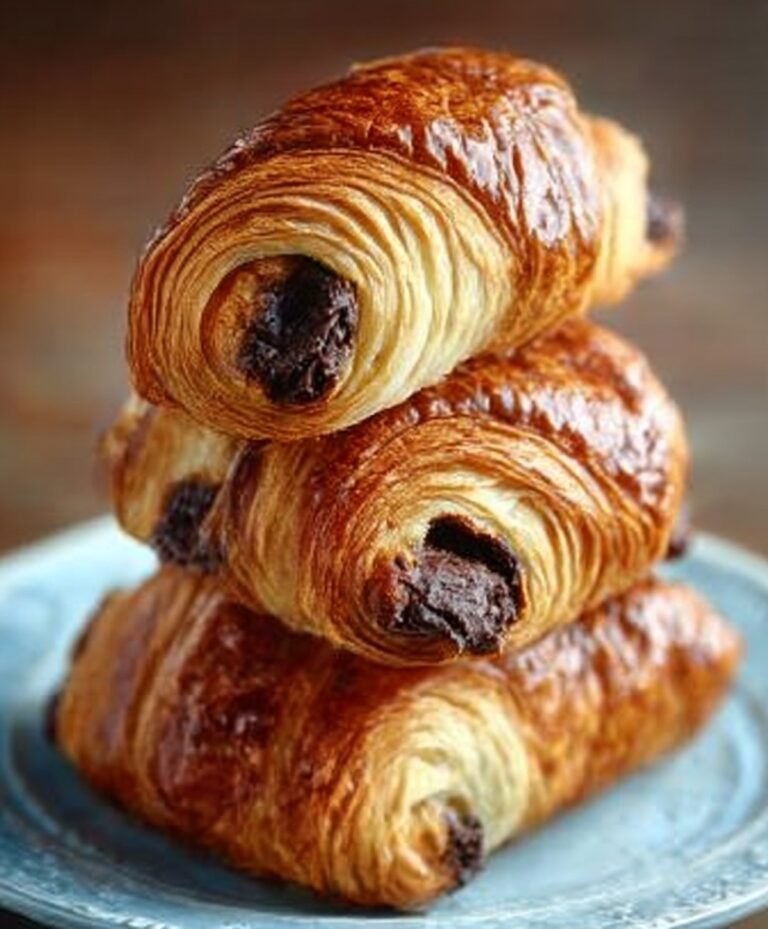
Easy Homemade Chocolate Croissants Recipe
Master effortless pain au chocolat! Eight minutes of prep yields 8 golden, buttery croissants bursting with melted semi-sweet chocolate. Quick 400°F bake ensures flakiness.
- Total Time: 35 minutes
- Yield: 4 servings 1x
Ingredients
- 1 package (14.1 oz/2 sheets) frozen puff pastry, thawed
- 1 cup semi-sweet chocolate chips or batons (approx. 4 oz)
- 1 large egg
- 1 tablespoon water or milk (for egg wash)
- 2 tablespoons all-purpose flour (for dusting surface)
- Powdered sugar, for serving (optional)
Instructions
- Step 1: Preheat the oven to 400°F (200°C). Thaw the puff pastry according to package directions (usually about 30-40 minutes at room temperature). Line a baking sheet with parchment paper. In a small bowl, whisk the egg and the water or milk to create the egg wash.
- Step 2: Gently unfold one sheet of puff pastry onto a lightly floured surface. Using a sharp knife or pizza cutter, cut the sheet into 4 equal rectangles (approx. 4×5 inches each). Repeat this process with the second sheet, yielding 8 total rectangles.
- Step 3: Place 2 to 3 chocolate batons, or a line of semi-sweet chocolate chips, along one short edge of each pastry rectangle. Starting from the chocolate side, tightly roll the pastry toward the opposite edge, forming a small log. Place the finished croissants seam-side down on the prepared baking sheet.
- Step 4: Brush the tops and sides of each rolled croissant evenly with the prepared egg wash. This coating ensures a beautiful golden, glossy finish during baking.
- Step 5: Bake for 15 to 20 minutes, rotating the pan halfway through, until the croissants are puffed up and deeply golden brown. Let cool for 5 minutes on the sheet before transferring to a wire rack. Serve warm, optionally dusted with powdered sugar.
Notes
- For best flakiness, store cooled leftovers in an airtight container at room temperature for up to 2 days; refrigerating them can make the pastry texture rubbery.
- To revive day-old croissants, reheat them in a toaster oven or standard oven at 300°F (150°C) for 5-7 minutes until the outer layers crisp up again.
- Enhance the breakfast experience by serving these warm croissants alongside a strong espresso and a small bowl of fresh raspberries or sliced strawberries.
- To maximize the puff and flaky layers, work quickly while rolling the dough, as keeping the puff pastry chilled ensures the butter layers remain firm before baking.
- Prep Time: 15 minutes
- Cook Time: 20 minutes
- Method: Stovetop
- Cuisine: American
Nutrition
- Serving Size: 1 medium croissant (approx. 95g)
- Calories: 420
- Sodium: 280mg
- Fat: 28g
- Saturated Fat: 17g
- Unsaturated Fat: * The % Daily Value for Unsaturated Fat and Trans Fat is not established.
- Trans Fat: 0.1g
- Protein: 18g
FAQs
What is the best way to handle the dough to ensure flakiness in this Easy Homemade Chocolate Croissants Recipe?
The cardinal rule of croissant making, even when using puff pastry sheets, is to keep everything cold. Flour your surface lightly, but avoid adding excessive flour, which can toughen the dough. If the pastry starts feeling sticky or elastic during the rolling and cutting phase, stop immediately and place it back into the refrigerator for 10 to 15 minutes. This chilling time re-sets the butter layers, ensuring that when the croissants hit the high heat of the oven, the rapid expansion of the steam creates those hundreds of delicate, shattering layers. Working quickly and keeping a cold demeanor is essential for achieving optimal lift and texture.
Can I prepare the dough the night before and bake these chocolate pastries in the morning?
Absolutely, and this strategy is perfect for a truly stress-free morning. You can assemble and shape the homemade pastries completely, brush them with the egg wash, and then place them on the baking sheet. Cover the tray loosely with plastic wrap and refrigerate them overnight. In the morning, remove the pastries from the fridge while the oven preheats; they may need an extra minute or two in the oven compared to baking immediately. Having them ready to go ensures you have warm, freshly bakedEasy Homemade Chocolate Croissants Reciperesults with almost no effort at breakfast time.
What type of chocolate works best for these homemade chocolate treats?
For the best results in this homemade chocolate croissants recipe, you should prioritize quality dark or semi-sweet chocolate. Specifically, using chocolate batons (often labeled as “baking sticks” or “pain au chocolat sticks”) is ideal because they are designed to melt slowly and hold their shape better than chips or finely chopped pieces. If you cannot find batons, a high-quality bar of chocolate chopped into thick, finger-length pieces works as an excellent alternative. Avoid overly sweet milk chocolate, as the intense heat of baking can cause it to scorch easily before the pastry has fully cooked through.
What is the best method for storing and reheating leftover chocolate croissants?
While these homemade pastries taste best straight from the oven, you can store cooled leftovers in an airtight container at room temperature for up to two days. To revive their crispness, avoid using a microwave, which will only make them soggy. Instead, reheat the croissants in a preheated oven or toaster oven at 350°F (175°C) for about five to seven minutes. This brief exposure to dry heat will re-crisp the outer layers, making them taste almost as fresh as they did when they first came out, ensuring no flaky goodness goes to waste.



Leave a Comment